Every Animal Can Succeed

Some pets won’t like another animal and thats ok! They don’t have to like them to cohabitate. They just won’t be best friends. They can learn to respectfully cohabitate with ANY animal if you give them the tools, guidance, and patience to do so.

I see way too many people give up too soon when trying to add a rescue pet or new pet to the home. My hope is after reading this story, more people will give it a little more time, or try a little harder. Humans love instant gratification but adding a pet to the home is work, time, patience, love and consistency before gratification. But it is always worth it.

Here is my story of animals living together that don’t “like” each other.

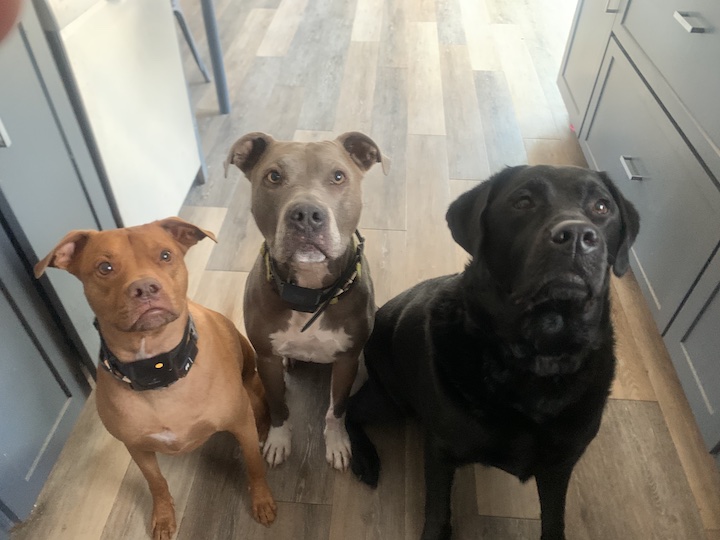
When my dad died in April of 2024 I inherited his black lab, Buck. My pitbul, Titan, HATED buck. Buck was about 4 years old, Titan about 5. They met as young dogs but Titan never accepted Buck. He would growl, lunge, full on attack. We worked on pack walks, etc. but honestly never dedicated enough time to it because they didn’t live together so we just said nevermind. 

I would go visit my dad and if Buck was outside and Titan was in my car he would go nuts at the window, agressive barking, trying to get out when I’d open the door, etc. Like most, I ignored it because I knew animals do not have to like everyone they meet, just like humans dont. 

Once Titan even jumped out of my open sun roof to go full on attack Buck. Another time, Titan ran across a 10 acre field to go attack Buck. Titan went out of his way on many occasions to seek out Buck and fight. Buck never once retaliated. It was a one sided hate. 

Clearly, I never thought I was going to inherit my dad’s dog. My dad died unexpectedly and rehoming Buck wasn’t an option. Animals are family. So I committed to making this work. I was forced. It took months. Months of me having them on leashed when in the house. Correcting and redirecting Titan when he would go after Buck. 

Titan was tethered to me anytime Buck was in the main area of the house. Sometimes Buck would get a break in the bedroom and TItan could be untethered but I had to keep reminding Titan to not go to the door and try to get Buck, through the door. 

Then it went from attacking intentions to hackles up. Then it went from hackles up to Titan being tense. Then it went from Titan being tense to Titan being off the tether, but my eye very on him. Because if Buck made one move that TItan didn’t like, the light switched and Titan went after him. 

Titan doesn’t listen to anyone else so I always had to be around when Buck was in the main area. 

Now, they are fine! They cohabitate and they are ALL happy but they don’t like each other. Buck growls at Titan out of fear, Titan has learned to ignore it. Not many dogs could stand near a dog growling at them and not retaliate, but Titan has learned not to. Titan is a very domninant, alpha dog, but he has learned that he has to cohabitate with Buck. 

We don’t leave them unservised alone and never will be able to, but when we are home, even my kids now (if I am not home) they can all be together and trusted without an extra eye on them. Titan and Buck just don’t lay down together or play together or hang out together. They all go outside together. When there is food around TItan and Buck can sit side by side and ignore each other : ) 

So it CAN be done. But it takes time, patience, consistency and commitment. 

I have never seen a day hate another dog as much as Titan hated Buck, but he learned to cohabitate with force free redirection and consistency.

The Most Common Mistakes Humans Make When Adding A New Pet To The Home

Two is always better than 1 when it comes to animals!

With very few exceptions, two animals are better than one because all of our domestic pets are meant to live with others of the same breed. Cats live in a colony. Dogs live in packs. Horses live in herds. Birds live in flocks. You get the idea.

Now of course due to trauma or lack of socialization some animals simply can not cohabitate with others. But, most of them cant. Issues arise when humans do not allow proper slow introductions.

Common mistakes made by humans when adding new animals to the family – even when your current pet(s) are very social.

Introductions done inside the home (introductions should be on neutral ground)
If you have indoor cats, find a safe space in a garage or basement (somewhere your cat doesn’t often go)

Forcing pets to “like” everyone. Some pets won’t like another animal and thats ok! They don’t have to like them to cohabitate. They just won’t be best friends. They can learn to respectfully cohabitate with ANY animal if you give them the tools, guidance, and patience to do so. I have experienced this in my home when I added my dads dog to our family. (Read the story in comments)

Give up too quick. You don’t make a best friend in 30 minutes. Don’t expect your pet to make a best friend right away either. It takes MONTHS.

Blaming one animal if the introduction goes poorly. Yes, there are times it is one animal who instigated, BUT it’s not that animals fault. That animal may have felt unsafe, threatened, or unsure because of a mistake a human made with the introduction.

  • Setting pets up to fail by throwing them together too soon. Adding a new animal to a family means separation from each other when not supervised, for longer than humans want.
  • Not putting in the time or effort and expecting instant gratification. Humans love instant gratification. Many get frustrated, annoyed, or impatient when things aren’t instantly easy. Animals feel this energy and it escalates tension. If you don’t put in the time or effort you are setting them up to fail. All of them.
  • Not taking into consideration an animals past. Humans go through trauma and it can stay with them for their entire lives. Animals are the same. If they have gone through trauma do not expect them to leave that at the door when they enter your home. It comes in with them. And if you put them into a situation that triggers that trauma you are setting them up to fail.

Every single animal CAN succeed if humans take the time, put in the effort, and have the patience. When you bring a new baby home from the hospital your current kids may be jealous, mad, or pull “tantrums” because they don’t want to share attention. Animals are the same. They are the equivalent of a 2 year old. You wouldn’t bring your newborn back to the hospital. You would work with your kids over time to cohabitate. Fully expecting challenge and behavioral issues along the way. Animals are the same.

THE STORY OF ADDING BUCK TO OUR FAMILY

Here is my story of animals living together that don’t “like” each other.

When my dad died in April of 2024 I inherited his black lab, Buck. My pitbul, Titan, HATED buck. Buck was about 4 years old, Titan about 5. They met as young dogs but Titan never accepted Buck. He would growl, lunge, full on attack. We worked on pack walks, etc. but honestly never dedicated enough time to it because they didn’t live together so we just said nevermind. 

I would go visit my dad and if Buck was outside and Titan was in my car he would go nuts at the window, agressive barking, trying to get out when I’d open the door, etc. Like most, I ignored it because I knew animals do not have to like everyone they meet, just like humans dont. 

Once Titan even jumped out of my open sun roof to go full on attack Buck. Another time, Titan ran across a 10 acre field to go attack Buck. Titan went out of his way on many occasions to seek out Buck and fight. Buck never once retaliated. It was a one sided hate. 

Clearly, I never thought I was going to inherit my dad’s dog. My dad died unexpectedly and rehoming Buck wasn’t an option. Animals are family. So I committed to making this work. I was forced. It took months. Months of me having them on leashed when in the house. Correcting and redirecting Titan when he would go after Buck. 

Titan was tethered to me anytime Buck was in the main area of the house. Sometimes Buck would get a break in the bedroom and TItan could be untethered but I had to keep reminding Titan to not go to the door and try to get Buck, through the door. 

Then it went from attacking intentions to hackles up. Then it went from hackles up to Titan being tense. Then it went from Titan being tense to Titan being off the tether, but my eye very on him. Because if Buck made one move that TItan didn’t like, the light switched and Titan went after him. 

Titan was tethered to me anytime Buck was in the main area of the house. Sometimes Buck would get a break in the bedroom and TItan could be untethered but I had to keep reminding Titan to not go to the door and try to get Buck, through the door. 

Then it went from attacking intentions to hackles up. Then it went from hackles up to Titan being tense. Then it went from Titan being tense to Titan being off the tether, but my eye very on him. Because if Buck made one move that TItan didn’t like, the light switched and Titan went after him. 

Titan doesn’t listen to anyone else so I always had to be around when Buck was in the main area. 

Now, they are fine! They cohabitate and they are ALL happy but they don’t like each other. Buck growls at Titan out of fear, Titan has learned to ignore it. Not many dogs could stand near a dog growling at them and not retaliate, but Titan has learned not to. Titan is a very domninant, alpha dog, but he has learned that he has to cohabitate with Buck. 

We don’t leave them unservised alone and never will be able to, but when we are home, even my kids now (if I am not home) they can all be together and trusted without an extra eye on them. Titan and Buck just don’t lay down together or play together or hang out together. They all go outside together. When there is food around TItan and Buck can sit side by side and ignore each other : ) 

So it CAN be done. But it takes time, patience, consistency and commitment. 

I have never seen a day hate another dog as much as Titan hated Buck, but he learned to cohabitate with force free redirection and consistency.

Does Your Pet Have Enough Freedom?


I see a lot of posts about cats not coming home, or dogs not having recall once off leash. Though we try to control animals they have free will. 

When they don’t come back it’s not always personal. Sometimes they feel too confined. 

Dogs for example – if they rarely get off leash, when they do they’ll be excited happy and wild! Like a kid would be if of made them sit still all the time. Once off leash – This freedom for them feels glorious. If they are running and you react, tie them back up, scold them, etc they will run farther , faster, and longer next time because they are afraid of their freedom healing taken away. They want choices like we all have. They NEED time to run and if they aren’t given that time, especially certain breeds, they WILL bolt off leash. Yes we have to teach them not to, but all the “training” in the world won’t work if they aren’t allowed to run, ever. Or often enough. 

When they are celebrating freedom and you are mad, upset, panicked, they’re not going to want to come back to you, if your dog bolts make coming back fun! Run the other way playfully, calling them in a fun want not panicked. Go back and forth, towards and away, toward and away, make it a game of them chasing you. 

Cats, if they are strictly house cats without enough enrichment and exercise they may try to escape. Again, for exercise and freedom. I am a big advocate for house cats living inside for safety. But if they live inside you must provide enough exercise and enrichment for them to be happy and feel they have e choices and freedom. If not, they may try to run off. 

If your cat runs off just leave your scented items outside and stay calm. Call them calmly at feed times when they are expecting you to call them. If you have a house cat that took off it’s probably already scared and hiding, if you are calling in panic they will panic more. So call at feed time the exact same way you would if they were in the house. 

Mostly allow animals freedoms and choice when you can safely so they don’t feel the need to “bolt” and not return

Simple Ways to Improve Your Pet’s Day

Here’s a simple thing you can add to your daily routine to show your pets more love. 

Tell them what you love about them. Or recognize something they do that you like.  It’s basically giving you pet a compliment each day. We all like to get compliments, animals are no different. 

We often correct them for behaviors we don’t like, but do their desired behaviors get as much attention or reward? The desired behaviors should get more! 

Examples: 

* I like when you greet me every time I come. 

* You look so pretty today! 

*  I love how patiently you wait for me to prepare your meals. 

* I love how you come sit with me on the couch. 

* I love how generous you are with your kisses. 

* I love how you make me feel better when I am sad. 

* I love how excited you get when it’s time to play or go for a walk. 

* you smell so good today! 

The Holidays & Your Pets

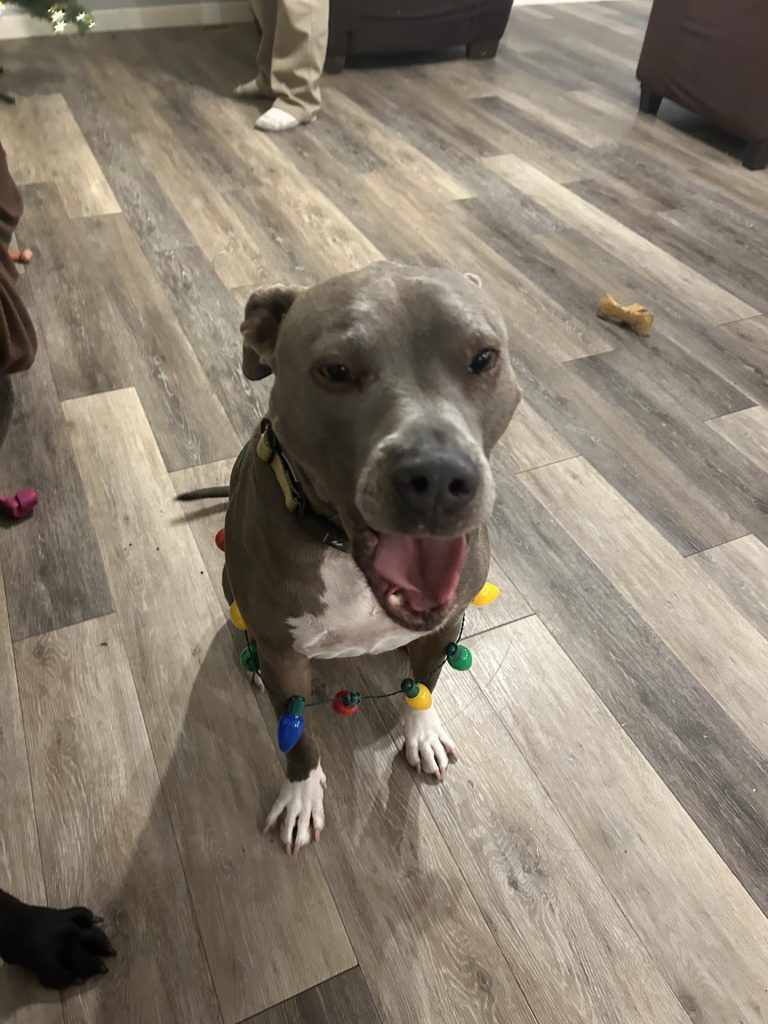
The holidays affect pets, hugely! The holidays can fill homes and humans with stress, anxiety, busyness, joy, happiness or excitement. Sometimes a mix of all of these! Like humans some pets will thrive on the energy and get excited too. These pets may be over active, over stimulated, and over tired by the end. These emotions can cause pets to react out of character. Have extra patience with them. Do not discipline them for their emotions, they are just excited like the humans are! And they will express it by being overly active, jumpy, loud, or wild! Allow them to celebrate and be happy! Animals express their joy without containment. 


Containing joy is not something animals know how to do, and truthfully why would we want them to? They are here for such a short time, let them live it up fully an be happy and excited! For these pets, it may be easier (on you) to put them in a crate or a room so you don’t have to baby-sit their energy. But that is not easier for them. If they enjoy the holidays they WANT to be included. And though it is more work for you, they deserve to be included, and deserve to have you watch over them so they succeed. Isolating them will hurt their heart.

But also, keep an eye on these pets. As they become over stimulated they can react quickly and unintentionally from fatigue. When they need a break, put them in a spot where they can take a break.

Some will get anxious and afraid and stressed. To some, it will feel like chaos. Especially when homes get busy with a bunch of people. For pets that are more reserved, not so social, anxious, fearful or nervous, guests in the home can feel like an invasion of their safe space.

For pets that are overly sensitive (this does not mean they are fearful or anxious), this can be overwhelming. These pets absorb the energy and “issues” of every human in the home. We know animals absorb our energy. And even more so, after everyone leaves, their energy lingers. These pets that are extra sensitive will feel this for days, maybe even weeks (if someone was really heavy on emotion). This is all very hard on our pets.

Even the ones that enjoy the excitement of the holidays. It is your responsibility to put your pets first. To watch them to they are set up for success. To have them take a break if needed. Keep guests away from them if needed. Give them a safe and quiet space if needed. Have patience with them. Whether they get excited and happy, or stressed and overwhelmed, they need guidance and support so they can succeed. Our responsibility, not just during the holidays but always is to set our pets up to succeed. It is possible, for every animal in every situation.  

End of Life Moments

One of the most difficult parts of animal guardianship is the moment we have to say goodbye to our best friends.

Though we know they will always be around us, it is important to recognize the transition from the physical to the Rainbow Bridge is a tiring journey for any soul.

The emotion in both the animal and the human is very intense. When I do these readings I feel it so deeply, it is so emotional.

Animals of course don’t want to see their guardians sad. They understand the grief, but since they are more spiritually evolved than we are, they see this moment of “death” differently. That is why they don’t even like to use the words “death” or “die”.

They are, in their words, making a journey to the Rainbow Bridge. They are transitioning back to spirt.

So in the final moments (another human term), there are some comforting words you can say to your pet, through your tears and your grief. Speak softly and with a voice as calm as you can be.

These phrases will help your animal start their journey free from the burdens the physical life puts on them.

“Safe travels on your beautiful journey, dear friend. “

“Thank you. I love you. You have been the biggest blessing to me.“

“It’s okay to go.” (This one is SO important. The most important. Their loyalty makes it hard for them to go without our permission)

“I’m here with you. I’m not leaving. ” (Again, SO important. They all want and NEED their guardian with them.)

“ My life was better because of you. “

“You are the best boy/girl.”

The moment your pet heads to the Rainbow Bridge is a beautiful moment for them, although it is a painful moment for us. Please use the phrases above. They
will make your pets transition even more beautiful, peaceful, and joyful.

RSS
Follow by Email
Set Youtube Channel ID
Instagram