The Most Common Mistakes Humans Make When Adding A New Pet To The Home

Two is always better than 1 when it comes to animals!

With very few exceptions, two animals are better than one because all of our domestic pets are meant to live with others of the same breed. Cats live in a colony. Dogs live in packs. Horses live in herds. Birds live in flocks. You get the idea.

Now of course due to trauma or lack of socialization some animals simply can not cohabitate with others. But, most of them cant. Issues arise when humans do not allow proper slow introductions.

Common mistakes made by humans when adding new animals to the family – even when your current pet(s) are very social.

Introductions done inside the home (introductions should be on neutral ground)
If you have indoor cats, find a safe space in a garage or basement (somewhere your cat doesn’t often go)

Forcing pets to “like” everyone. Some pets won’t like another animal and thats ok! They don’t have to like them to cohabitate. They just won’t be best friends. They can learn to respectfully cohabitate with ANY animal if you give them the tools, guidance, and patience to do so. I have experienced this in my home when I added my dads dog to our family. (Read the story in comments)

Give up too quick. You don’t make a best friend in 30 minutes. Don’t expect your pet to make a best friend right away either. It takes MONTHS.

Blaming one animal if the introduction goes poorly. Yes, there are times it is one animal who instigated, BUT it’s not that animals fault. That animal may have felt unsafe, threatened, or unsure because of a mistake a human made with the introduction.

  • Setting pets up to fail by throwing them together too soon. Adding a new animal to a family means separation from each other when not supervised, for longer than humans want.
  • Not putting in the time or effort and expecting instant gratification. Humans love instant gratification. Many get frustrated, annoyed, or impatient when things aren’t instantly easy. Animals feel this energy and it escalates tension. If you don’t put in the time or effort you are setting them up to fail. All of them.
  • Not taking into consideration an animals past. Humans go through trauma and it can stay with them for their entire lives. Animals are the same. If they have gone through trauma do not expect them to leave that at the door when they enter your home. It comes in with them. And if you put them into a situation that triggers that trauma you are setting them up to fail.

Every single animal CAN succeed if humans take the time, put in the effort, and have the patience. When you bring a new baby home from the hospital your current kids may be jealous, mad, or pull “tantrums” because they don’t want to share attention. Animals are the same. They are the equivalent of a 2 year old. You wouldn’t bring your newborn back to the hospital. You would work with your kids over time to cohabitate. Fully expecting challenge and behavioral issues along the way. Animals are the same.

THE STORY OF ADDING BUCK TO OUR FAMILY

Here is my story of animals living together that don’t “like” each other.

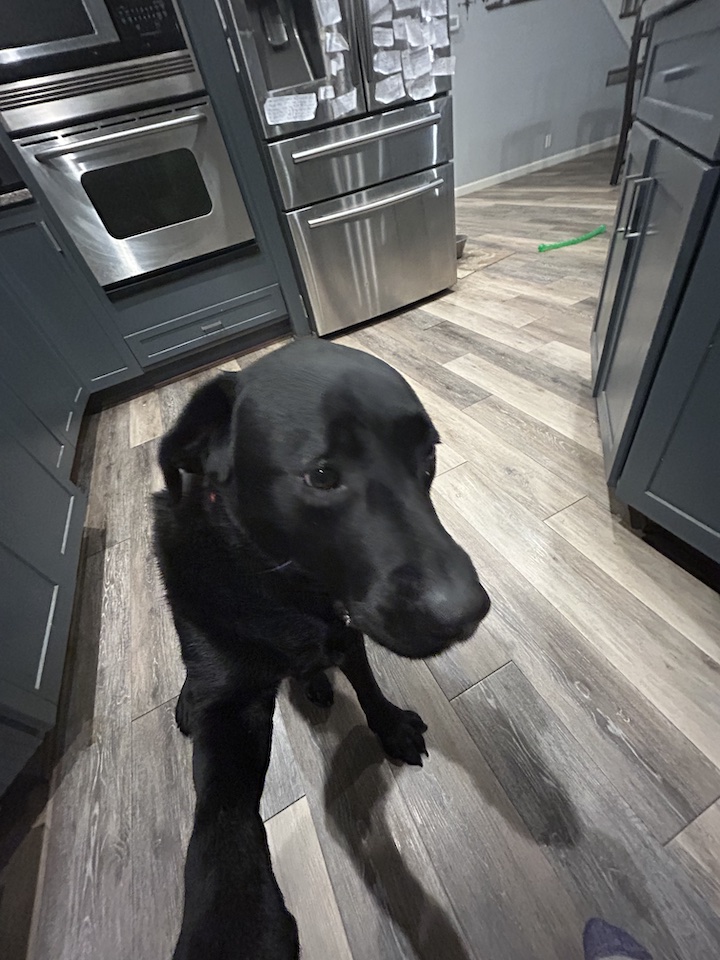
When my dad died in April of 2024 I inherited his black lab, Buck. My pitbul, Titan, HATED buck. Buck was about 4 years old, Titan about 5. They met as young dogs but Titan never accepted Buck. He would growl, lunge, full on attack. We worked on pack walks, etc. but honestly never dedicated enough time to it because they didn’t live together so we just said nevermind. 

I would go visit my dad and if Buck was outside and Titan was in my car he would go nuts at the window, agressive barking, trying to get out when I’d open the door, etc. Like most, I ignored it because I knew animals do not have to like everyone they meet, just like humans dont. 

Once Titan even jumped out of my open sun roof to go full on attack Buck. Another time, Titan ran across a 10 acre field to go attack Buck. Titan went out of his way on many occasions to seek out Buck and fight. Buck never once retaliated. It was a one sided hate. 

Clearly, I never thought I was going to inherit my dad’s dog. My dad died unexpectedly and rehoming Buck wasn’t an option. Animals are family. So I committed to making this work. I was forced. It took months. Months of me having them on leashed when in the house. Correcting and redirecting Titan when he would go after Buck. 

Titan was tethered to me anytime Buck was in the main area of the house. Sometimes Buck would get a break in the bedroom and TItan could be untethered but I had to keep reminding Titan to not go to the door and try to get Buck, through the door. 

Then it went from attacking intentions to hackles up. Then it went from hackles up to Titan being tense. Then it went from Titan being tense to Titan being off the tether, but my eye very on him. Because if Buck made one move that TItan didn’t like, the light switched and Titan went after him. 

Titan was tethered to me anytime Buck was in the main area of the house. Sometimes Buck would get a break in the bedroom and TItan could be untethered but I had to keep reminding Titan to not go to the door and try to get Buck, through the door. 

Then it went from attacking intentions to hackles up. Then it went from hackles up to Titan being tense. Then it went from Titan being tense to Titan being off the tether, but my eye very on him. Because if Buck made one move that TItan didn’t like, the light switched and Titan went after him. 

Titan doesn’t listen to anyone else so I always had to be around when Buck was in the main area. 

Now, they are fine! They cohabitate and they are ALL happy but they don’t like each other. Buck growls at Titan out of fear, Titan has learned to ignore it. Not many dogs could stand near a dog growling at them and not retaliate, but Titan has learned not to. Titan is a very domninant, alpha dog, but he has learned that he has to cohabitate with Buck. 

We don’t leave them unservised alone and never will be able to, but when we are home, even my kids now (if I am not home) they can all be together and trusted without an extra eye on them. Titan and Buck just don’t lay down together or play together or hang out together. They all go outside together. When there is food around TItan and Buck can sit side by side and ignore each other : ) 

So it CAN be done. But it takes time, patience, consistency and commitment. 

I have never seen a day hate another dog as much as Titan hated Buck, but he learned to cohabitate with force free redirection and consistency.

Does Your Pet Have Enough Freedom?


I see a lot of posts about cats not coming home, or dogs not having recall once off leash. Though we try to control animals they have free will. 

When they don’t come back it’s not always personal. Sometimes they feel too confined. 

Dogs for example – if they rarely get off leash, when they do they’ll be excited happy and wild! Like a kid would be if of made them sit still all the time. Once off leash – This freedom for them feels glorious. If they are running and you react, tie them back up, scold them, etc they will run farther , faster, and longer next time because they are afraid of their freedom healing taken away. They want choices like we all have. They NEED time to run and if they aren’t given that time, especially certain breeds, they WILL bolt off leash. Yes we have to teach them not to, but all the “training” in the world won’t work if they aren’t allowed to run, ever. Or often enough. 

When they are celebrating freedom and you are mad, upset, panicked, they’re not going to want to come back to you, if your dog bolts make coming back fun! Run the other way playfully, calling them in a fun want not panicked. Go back and forth, towards and away, toward and away, make it a game of them chasing you. 

Cats, if they are strictly house cats without enough enrichment and exercise they may try to escape. Again, for exercise and freedom. I am a big advocate for house cats living inside for safety. But if they live inside you must provide enough exercise and enrichment for them to be happy and feel they have e choices and freedom. If not, they may try to run off. 

If your cat runs off just leave your scented items outside and stay calm. Call them calmly at feed times when they are expecting you to call them. If you have a house cat that took off it’s probably already scared and hiding, if you are calling in panic they will panic more. So call at feed time the exact same way you would if they were in the house. 

Mostly allow animals freedoms and choice when you can safely so they don’t feel the need to “bolt” and not return

Do You Expect Too Much?

The world we live in expects way too much of domestic animals. We ask them to be something other than what they are because our world is human centered. We do this by asking them NOT to engage in behaviors that ARE who they are (dogs, cats, horses, etc…). Why? Because those behaviors don’t line up with human life.

Our pets are doing their best to understand our world, adapt to it, and to live in it. We humanize them. This is not terrible. In fact, it is often how we show love. And yes, they DO have all the emotions humans have, so it’s easy to do.


But… we have to remember they are still animals. They still have instincts, even though they are domestic. And since they are a different species than us, their needs are different. Expecting them to let go of the traits and the behaviors that are part of who they are is unfair. Yet, so many of us do it. Most of us do it to some degree.

Despite this, the amount of patience and forgiveness they continue to extend to us is unwavering. It’s mind blowing actually. No matter how many times YOU ask them to be something they aren’t, they still try. And most of the time they follow our rules that take away most of their natural behaviors. It’s quite sad actually.

The majority of pets in this world are misunderstood or held to unreasonable expectations. But, they are loved. Love isn’t enough. You owe it to your pet to allow them to be what they are. A dog, a cat, a horse, a bird, etc..)

Please take the time to read through this if you love your pet. It may just give you a different perspective and make you realize you might be expecting too much.

You may skip to the section relevant to the type of pets you have, but please take note at the end there is a paragraph that applies to ALL species of pets. Please visit that too!


Let’s start wtih dogs because they are so popular.

Barking –
We ask them not to bark, tell them to “shut up” at times. Their bark is their VOICE! Imagine if you could never talk. How frusteraed would you be? They bark for a reason. You may not know what that reason is but they have one. Maybe it is just to be heard! Maybe they are frusterated with always being told NOT to use your voice. Maybe, they are protecting or alerting you, the only way they know how. What may not seem like danger to you, can seem like danger to them. And when you shame them for doing so, that hurts their heart. When they bark, thank them. Please, I beg you, thank them. They are simply displaying DOG behaviors. They have a voice too.

Sniffing –
We’ve all seen the memes. Sniffing is like reading email for dogs. It’s like a phone call or a text. It’s like browsing the internet. It’s how they gather information. They need to gather information to feel safe, secure, and enriched. If you always pull them away from tings they are sniffing they lose the ability to gather information. They will feel more confused, more afraid, and more unsure. They will feel like they are missing out on something. How many times do you search the internet, read a book, get a call or a text? You gather information for the vast majority of the day. Can you allow them the same? Don’t rush them on walks. Let them sniff. If you come home with something new, show them and let them sniff. If you don’t allow them to sniff, they feel isolated and frusterated. They need an expanded world, like we do. Too much of their lives are spent just in our house. They need MORE. And sniffing can expand their world. When you walk, and even just bringing new things into the house.

Pulling – Quite simply, dogs walk faster than us. That is why they pull. Why do we have to force them to walk slower? If you can’t let them off leash, YOU walk faster. Are they pulling because you never let them sniff? Let them sniff. They want to be in front to keep you safe. Pulling is not disobedienace, it’s dogs being dogs.

Now I understand they can be injured pulling (neck, windpipe, etc) so we do have to find modifications (harness, walk faster, or simply, let them walk in front of you).

Digging/Chewing – This is a natural behavior for dogs. It provides comfort, relaxation, and enruchment. It’s part of who they are, it’s that simple. If we do not give them the opportunity to do these things we are taking away their core behaviors. The behaviors that keep them mentally healthy and stimulated. Behaviors they find FUN and fufilling because it is in their DNA to do these things. We have domesticated them but they still hold onto species specific behaviors and that is what these are.

Emotions- How often do we ask dogs not to show emotions? Almost always. When dogs get excited, we ask them to calm down. That is how they show excitment! Jumping around, bouncing, running, etc.. It’s their expression of joy, happiness, and love.

When they growl or show teeth they are requesting space in THEIR language. They are asking kindly even though it seems they aren’t. To them, it IS kind. It is a warning. They are telling you they are NOT comfortable, they don’t feel safe, or they just need a break. When you are in those situations you can walk out and leave. Or, we’ve all done it, we snap… yell for a minute, slam a door, then feel better. That’s all dogs are doing! But they are doing it in the only way they know how. The way that has been bred into their species. Yet we ask them NOT to show their emotions. Imagine having to keep your inside? As a human, you’d eventually explode. Guess what… they do too.

These are just a few ways we ask dogs to be something other than who they are.

Now Cats….

Hunting – We ask domestic cats to live inside and this prevents them from engaging in the natural behavior of hunting. Something that provides them with mental and physical enrichment and exercise. When they aren’t allowed to hunt, they will bite and scratch humans, fight with other cats, or do anyhing they can to mimick hunting behavior. They don’t know any other way! Yes keeping them inside is safer, so I agree with that. But if you are going to do that, you must provide hunting simulation. Either by playing WITH them in hunting fashion or providing visual stalking enrishment (bird feeder, TV, etc..)

Scratching – Not only do humans expect cats NOT to scratch walls or furniture, sometimes they even declaw them! Scratching is a natural behavior for cats. It provides comfort, relaxation, and enruchment. It’s part of who they are, it’s that simple. It’s how they keep their area clean when they use the bathroom (burying it). It is a core part of being a cat. So please give them places to scratch. Their wellness depedns on it.

Hissing/Biting – This is their communication. It is how they tell you when they are uncomfortable, feel unsafe, or need space. It is like they ASKING you to leave them alone. Not if you don’t listen to their polite ask, YES they will probably bite harder, attack, etc… But in their defense they already warned you. If they are showig you they are not OK with something, it is unfair to ignore their request and force something on them. Asking them to keep their emotions inside is NOT healthy or fair.

Ok, how about horses?

Stalls – Horses are meant to walk and graze. Their digestion is dependent on movement. When we ask them to live in stalls we are taking away their bodies ability to digest properly. We are taking away their enrichment and exercise. Having a horse in a stall for more than a few hours is no different than having a dog in a crate. Why do horse people feel it’s different? It isn’t. Some horses live in stalls 22 hours a day. If anyone had a dog in a crate for 22 hours people would be up in arms about it. But it’s ok for horses? Why? The ratio of the size of the area compared to the size of the animal is the same. Horses need to be outside, moving, for as many hours as possible. They need it mentally and for their physical health.

Kicking/biting – This is the way they communicate that something hurts or is making them scared or uncomfortable. Can it hurt us? Yes, it can! But, if we choose to work with these big animals we are choosing to take that risk. If you punish them for showing you something hurts, they will stop showing you until it becomes so unbearable they explode. And they it will be a lot more dangerous for you.

Bucking/rearing – When we put horses under saddle we again are accepting the risk that their behavior may hurt us because of their size. But it is again unfair to punish them for displaying these behaviors (bucking, rearing, etc). Those behaviors are them telling us something horse, something is confusing, or it’s just too much pressure. They are communicating with us the only way they know how. So instead of punishing them, take a step back and be softer, fix your riding, allow them grace. THANK THEM for showing you something is not right. It is a privledge to ride a horse, they do not owe that to us. So if it is not 100% comfortable for them, YES they should tell us in the way they can. And YES, we should change something so it IS 100% comfortable for them. But humans have a hard time accepting they (the human) is the one making the mistake. Trust me… it’s almost always the human.

Now what about ALL the animals as a collective …

All of the animals I have mentioned are herd, pack, colony, etc.. They are bred to ive in groups of some sort. Yet, we keep horses alone. We ask dogs to be the only, cats to the be only. Imagine being the ONLY human in a group of dogs?? Ok wait, that might actually be pretty awesome!

Seriously though, imagine being the only human, in a group that speaks an entirely different language and lives an entirely different lifestyle. Could you be as patient as your pets are? Companionship of the same species is important for ALL living beings. (Yes I do know there are rare exceptions of animals that don’t get along with others).

But also, remember on the flip side, our animals do not have to like every human they meet, every dog they meet, every cat they meet, or every horse they meet. The same goes for goats, birds, rabbits, etc.. All animals have personality and energy and some won’t get along with each other. And that is ok! Just like you will have best friends, acquaintences, and others you don’t really like too much. Animals should be allowed the same opinions on others. They are individuals like us.

Now I am NOT an advocate of rehoming pets. So when household pets don’t get along, I do truly beleive it is the humans responsibility to accommodate. Have differen parts of the house for each animal, work through the dislike as much as possible, allow decompression and personal space. The paragraph about is more about not expecting your pet to be a social butterfly. Some will be, some won’t. Honor who they are.

Now let’s talk about animals and humans. We love them… oh do we love them! we want to kiss them, hold them, pat them. But sometimes they need space! Just like we do. If they are not in the mood to be kissed, hugged, petted, give them space. Don’t take it personally. It doesn’t mean they don’t love you. They just need quiet time now and then like we do. They don’t have to accept being kissed and hugged every waking moment. Sometimes they want peace and quiet. You know your pet. Show them love, but when they walk away because they have had enough, let them walk away. Don’t chase them. Don’t hold them forcing them to stay. Let them leave.

Honor their personality. Don’t try to change it. Honor their species. They are bred to be a certain way. Honor their forgiveness and patience. When you think about how challenging their world is, even in a home full of love, it truly gives you a different appreciation for how much they tolerate

My passion and my reason for doing this job is for these animals to be heard and understood in a world that asks so much for them. If you read this, you are trying. Thank you. Thank you for trying to learn how to understand them and create a better world for them.

Accomodate Your Animals

Accommodate your pets

If you move, take them. You would take your child.

If your pet develops a behavioral issue, show them love, patience and understanding. Change what is happening. Don’t blame them or give up on them. Their behavior is their communication. They are trying to tell you something is wrong.

If you have a baby, keep your pet. It takes time, patience and understanding. Teach your pet how to be safe and respectful near your baby. Teach your child to be safe and respectful around your pet. The same expectation goes both ways.

If you adopt a pet, you are committed. It won’t be easy right away. It won’t be easy for a while. But be patient, make accommodations, make changes, make it EASY for your pet. It should be easy for them, hard for you. Not the opposite. But if you expect it to be easy for you, it will be hard for them. Give them TIME. So much time. These are the sacrifices we make to make them feel safe, loved, welcomed, and relaxed.

If something in your home or routine doesn’t work for your pet, change it. Don’t try to change the pet’s behavior or reaction.

Don’t give up on your pet. When it’s the hardest, that is when they need YOU most. They need your love, your patience, your understanding. They need you to help them. Not give up on them.

If your pet needs exercise, accommodate. If your pet needs your time, accommodate. If your pet needs to avoid a certain situation or person, accommodate. If your pet needs space, accommodate. This is how you build trust, love and a true relationship with them.

Animals are too often expected to adapt to our lives. But the trust is, they are the ones that are less capable so we need to adapt our lives to THEM. Just like we would with children. When you have a child your life will change. The same applies when you have animals. Expect your life to change.

Animals are willing to do anything and everything we ask if we take the time to teach them slowly and in a way they can understand. There is no purer form of love or loyalty on this planet.

Reacting to Reactive Pets

When our animal “react” they need our support not our discipline. They need kind leadership, not punishment.

“Reactions” come from uncertainty or fear. Think of a reaction as a cry for help. That’s what it is. Animals are like children, they really are. If you child is scared or uncertain you would deescalate the situation, not make it worse with yelling, screaming or assertive tactics. Do the same for your pet.

* Be calm

* Be a leader  (which means be confident) that they KNOW will keep them safe. So many people get nervous BEFORE their pet reacts… this is why the animal reacts! The human is scared, so the animal thinks there is something to be afraid of!

* Be proactive. If you know there is something that triggers your pet, avoid it when you can. This creates less stress hormone in them.

* Have a plan. A plan that involves deesclation with calmness, patience and clarify.

* Take your pet to a quiet spot after a reaction. Let the animal unwind and relax. Hug them, kiss them, comfort them. This is not rewarding “bad” behavior. This is showing them they are safe and giving them time for the stress hormones to subside. After a “reaction” it takes time for the stress level to go down. They need quiet space and love for this to happen.  And you have 3 seconds when correcting animals, 3 seconds that’s it! By the time you get out of the trigger space, 3 seconds have passed. So if you are angry at your animal, scolding your dog, etc… your pet has NO IDEA why. Too much time has passed.

We MUST take care of our animals mental health. This is so often overlooked with pets. But it should not be. Allowing them to unwind, post reaction, with love, hugs and comfort is not rewarding them. It is letting them know they are safe and loved with you. It is mental health time, for them.

Things To Consider With A “Trainer”

Things to consider when hiring a “trainer”

A lot of trainer’s understand how to get animals to do things. Sometimes by force. Force doesn’t always mean abuse. It can mean no other option. But yes it can also mean shock collars, whips, spurs, incessant pressure on a choke lead, pushing a dog down into a sit or lay, or some punishment, etc.

These methods do not take the animals emotions into consideration. Though they will usually deliver results, they are not the best way to communicate with your animals.

Teaching animals, as I like to call it takes time and patience. If a trainer can deliver a result in record time there is usually a reason… and not a good one.

If you want to have the best relationship with your animals find a trainer that understands how animals think. If your animal has a behavior issue find a trainer that understand WHY the issue has presented, what is the animal unhappy or confused about. Then , correct the issue, not the animal.

This sounds simple, but you’d be surprised how many trainers just train the end results and never take into consideration the animal’s emotions, free will, or thoughts. When the animal is taught with kindness, patience, and understanding they are a million times quicker to learn. And more importantly your relationship will be better.

Animals are not robots. You dont have to raise your voice. You don’t need to talk firmly. When your animal has a true relationship with you, you can talk to them like a human and they will listen willingly. They WANT to please you.

When I walk my dogs they are off lead. When I see a human, dog, or bicyclist approaching, I call their name, they come over and they sit without being asked because we have practiced over and over. And now they choose to do it without being asked because they know every time, without exception they will get praised and get a treat, so they CHOOSE to do it.

When the walk is done, I call their names and softly say please sit. And they do and wait for their leads to be put on. And there are thousands of other animals that do the same because they were never forced, they were taught without force.

So when looking for a trainer, please always find one that knows how animals think and doesnt just force them to sit, come, with no insight into the animals feelings or thoughts. There are more forceful trainers that have a lot of ego, that lack true empathy, than there are trainers that understand how animals think.

Bringing Home A New Baby

Bringing a baby into a home is a huge adjustment for pets. New smells, new sounds, less attention, changes in routine and energy in the home.

I firmly believe children that are raised (appropriately) around animals are blessed. They become empathetic, loving and kind.

When you first bring a new baby home expect your pet to be unsure. They will sense your fatigue, anxiety, worry and stress.

They will try to be involved because they are part of the family! They might not be happy at first, but they’ll learn with time and patience.

They deserve that. Your time, your patience and your understanding. If you have a toddler and you bring a new baby home you explain things in depth and you teach your toddler how to behave around the new baby. Your pet deserves the same.

Please don’t expect just to know they aren’t suppose to lick, jump, scratch, etc. they need to be taught patiently. They need to be loved and included.

It’s ok to keep your pet on a leash for safety Initially. But please don’t isolate or ignore your pet. You wouldn’t do that to a toddler child. That will cause the wrong behaviors to manifest. And your pet will feel unimportant and discarded. Undesirable Behaviors will reflect this.

There will be jealousy. There will be confusion and uncertainty. But if you treat your pet the way you would treat your toddler who is welcoming home their first sibling, you will end up with an animal that adores your baby.

So bring home items that smell like the baby before the baby comes home. Give these to your pet. Show the pet the new areas for the baby. Make it FUN for your pet. Include your pet, while keeping everyone (baby and pet) safe. Your family can grow WITH your pet. And everyone, including your pet, can be happy and feel loved. Your pet deserves the time, patience, and inclusion. They would never ignore or isolate you.

And please, teach your baby/child to be gentle with your pet when that time comes. I see too many pets tolerating things they are unfair.

And as a bonus pets are GREAT at making babies and kids laugh!! And they make great best friends for kids.

Potty Training 101

Just a quick tip because most dogs will need to learn about potty training or need a refresher.

If your pet is unsupervised they have the ability to use any part of the house as their bathroom. Why would you assume they know they shouldn’t? They don’t. Unless someone teaches them consistently they don’t know. They don’t know right from wrong, they know what they’ve been taught (or not taught). And even IF they know to use the bathroom outside, if they are new in your house they don’t know where the door is.

Spanking or yelling at your pet for using the house as a bathroom will not work. Even if you catch them in the act. Animals learn best when undesirable behavior is never an option. It’s avoided. It’s prevented.

Potty training can be time consuming and frustrating because it can take a REALLY long time. But there is a way to speed it up?

Keep your dog tethered to you at ALL times. Puppies, adults, seniors, any dog that is moving into your home. Sound inconvenient? It is. But guess what it works SO well!

You will see when your dog is starting to show signs of needing to go to the bathroom. You will see sniffing, restlessness, etc. And you can bring your dog outside when you see these signs.

If your dog does seem to pee without you noticing ahead of time, I guarantee youll catch your dog in the act mid stream and you can pick the dog up or walk the dog outside. No harsh or loud words needed. Because you catch your dog in the act it is an effective correction.

If your dog is unsupervised around your house, you are less likely to notice the signs or if the dog uses the bathroom. And then it’s too late.

No matter what, consistency is the key. Your dog needs to be tethered to you all day every day for this to work quickly. But know what the added bonus is? The best part?

The relationship you will develop with your dog during this time will be so deep and so connected. You will literally be spending all your time together. Your dog will learn to trust you and to follow you (this helps recall!).

It is also very easy to ask for random “sits” or “downs” at various times during the day. Working your dog like this helps with enrichment, education, bonding, and stress relief. There are so many benefits.

If you have a new dog coming to live with you or just recently brought a dog into you family give it a try! But really give it a fair chance. Its not just a few days, its more like a few weeks. All day, every day, consistently. And crate when you aren’t home. Or can’t tether.

Challenges, Not Problems

Sometimes I learn from the animals and sometimes I learn from their guardians. 

One of my regular clients emailed me and used the word “ challenges “ instead of problems. It reminded me how important it is to make sure all of you understand the difference. 

None of the animals have problems. They are perfect beings in every day.  Many though, have challenges, just like humans. These challenges can be from past experience or just part of who they are. 

When someone has a challenge to overcome, support and empathy is needed. Not discipline. Not frustration. Not anger. Not a lack of understanding. When animals are trying to overcome challenges this can display as behavioral issues or insecurities. 

In those moments, you can explain something to them 1000x but they won’t understand. You can correct them over and over but they won’t understand. They will just suffer more and be more confused and feel more alone. 

What they need is for you to understand the challenge they are facing and trying to overcome. They need empathy. They need support. This support looks like you setting up their environment for them to succeed. That is the most important and effective thing you can do. 

SET UP THEIR ENVIRONMENT FOR THEIR SUCCESS. 

If you could view “problems” as “challenges”, how would that change your reaction to the situation?   And how would that change the way you engage with your pets in those moments?  Something to think about. 

They are so similar to us in so many ways. And if more humans understood that and offered them the same kind of patience, time, and understanding, relationships between humans and animals would be so much easier. 

Personalities Can’t Be Changed or Trained

Please don’t try to make your pet into someone it’s not.

Some pets are INTROVERTS. They like to spend more time alone. These are great for people that work a lot, have busy social lives out of the home, or aren’t looking for a pet they can cuddle with all the time. When you have an introvert, you can’t take it personally if they want to be alone.

These introverts are also good for people that can accept their pet’s personality and allow their pet the alone time that is desired.

There are others that are ACTIVE ADVENTURES! These are great for active people. Runners, hikers, people always on the go and willing to take their pet with them &/or provide plenty of exercise and engagement at home. If these pets do not get what they need (exercise and engagement) they usually become destructive and develop nuisance behaviors because they are frustrated.

Then there are some that are EXTROVERTS. They want to be with people ALL THE TIME. These pets are great for people that are home a lot, people that have busy homes with lots of people in and out, people that like to bring their animals to many places.

And let’s not forget the BROKEN pets. These pets need extra kindness, extra patience, and extra time. These pets are good for people with an extra gentle heart. People that are healers. People that can ADAPT their life to help these animals feel safe and secure.

Try your best to pick a pet that fits your lifestyle. It makes things so much easier for you and the animal. But, when you get a pet that doesn’t fit your lifestyle… what do you do?

So what do you do if you get an animal that doesn’t fit your lifestyle?

Have realistic and reasonable expectations. You can’t change them so try to do your best to provide what they need and all of a sudden everything gets easier.

This means adapting your lifestyle in some way, just like you would for a child. There are ways you can do this without burdening your family or without changing your lifestyle drastically. It requires compromise on both sides. But we do it for human children, and we need to do it for animals too.

* You can hire pet care (short check ins, full days, walks, day cares, play time, etc.)

* You can create quiet, isolated spots in the home for your pet to access when in need of alone time.

* You can set boundaries. There is NOTHING wrong with telling people they can’t pat your animal, engage with your animal, or hold your animal. There is NOTHING wrong with telling people your pet needs space. Or saying your pet is learning, and you need someone to disengage. YOU are the voice for your pets. YOU must advocate for them so they can succeed.

  • Set up self driven enrichment. There are many options for in home pets to keep them busy and entertained. Bird feeders by the window, engagement toys that toss food, dog/cat TV is now an option, music, etc.

* Give your animal a job is was meant for and bred for and ENJOYS (horses especially!)

* Get your animal a friend if they are social. This does WONDERS for ALL types of personalities.

* Make small changes to your life. More time to play, walk, go for a ride, etc… It can be 10-15 min or 60 min and it WILL help!

* When you DO have time, stay off your phone or the TV and engage with your animal fully. This attention on them WILL make a huge difference for all types.

Remember, animals don’t get to coose where they live. We choose. And if we choose to have them live with us, we are agreeing to make sure we meet their needs (physical and emotional).

So if you are considering bringing a new animal into the home, ask the current human about the animals personality type, its needs, and do breed research. Consider age, breed, current living situation of the animal. Explain yours to its current caretaker. Talk and communicate. The goal is for everyone to be happy.

Remember if your animal is doing something “wrong” it is their way of communicating their needs are not being met. Punishing them won’t help. Meeting their needs and understanding them will.

RSS
Follow by Email
Set Youtube Channel ID
Instagram