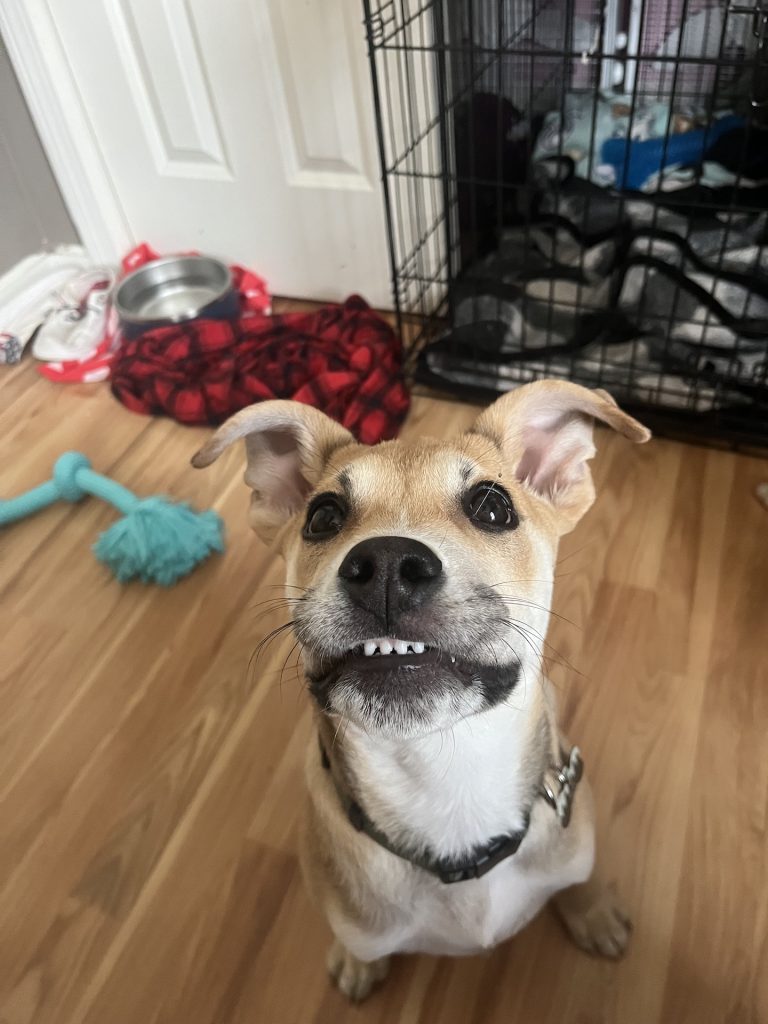
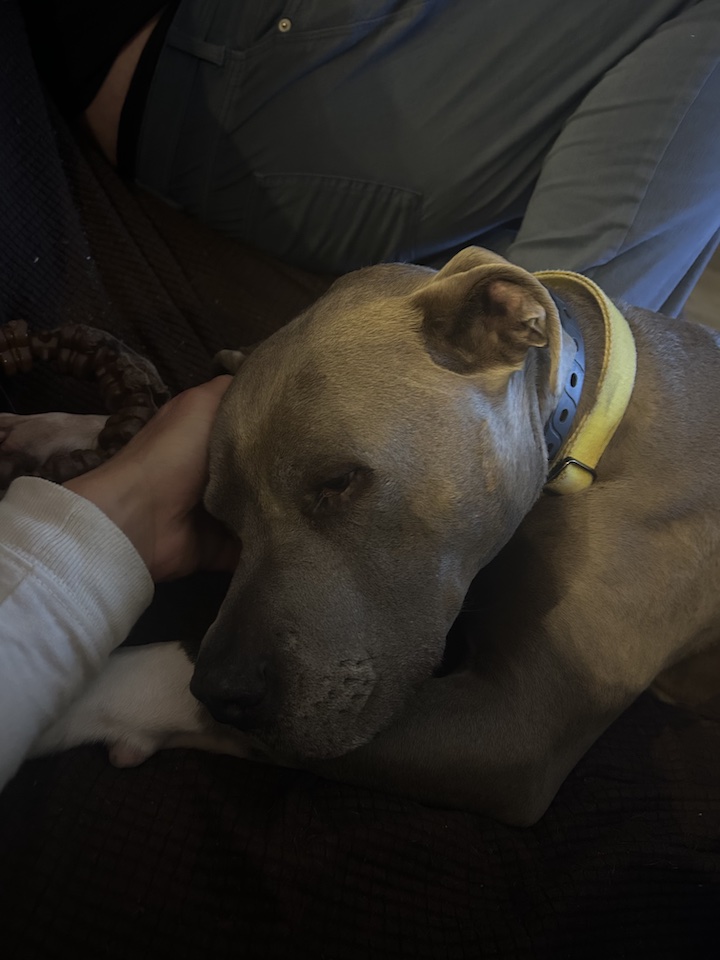
These are the ones that are more reactive and more anxious.
They are also the ones that love deeper.
If you have one of these souls you are blessed. They chose you to protect them and understand them. It’s a gift to be chosen by a soul that is so sensitive. They are trusting you with their safety, their heart, and their soul.
If your animal’s behavior suddenly changes, take a moment to look at what’s happening in your environment — not just theirs.
Animals are incredibly sensitive to emotional and energetic shifts. They often respond to things like stress, routine changes, or unspoken tension before we even consciously recognize it ourselves.
What can look like anxiety, restlessness, or “acting out” is often their way of processing or reflecting something deeper.
Before correcting the behavior, try this:
Pause and ask yourself —
“What has changed recently, even in a subtle way?”
Then observe your pet without reacting. You may start to notice patterns that weren’t obvious before.
When animals feel understood, their behavior often begins to shift naturally.
If you’re unsure what your pet may be responding to, this is something I help uncover in animal communication sessions — identifying what they’re experiencing and what they’re trying to express.
Understanding is often the first step toward change
When animals are reactive (dogs, cats, horses, goats), correction is not going to yield the fastest results. Exposure is not going to lead the fastest results.
What do these animals need? They are reacting out of emotion.
When you are emotional and someone tells you to “calm down”, does that work? Nope.
If someone were to discipline you would that work? Nope, you’d get more angry.
If someone were to correct you, tell you youre wrong, tell you youre over reacting, would that work? Nope. You are reacting because you truly feel the emotions causing that reaction.
If youre reacting and someone else fires back with high emotion, will that work? Nope, youll both keep escalating.
If you were emotionally triggered or felt unsafe by something and your parent kept making you see that thing, would that work? Nope you would stay in a heightened emotional place and continue to feel unsafe. In fact, you may even feel betrayed.
Teaching emotional regulation (which is what reactivity is in animals) is not done through correction, discipline, exposure, or training. It’s taught over time by starting with limiting exposure to triggers.
You have to recondition and rewire the brain. The brain has been conditioned to react. “Neurons that fire together, wire together”. Most people have heard this. It applies to animals too.
It takes time for the brain to rewire. How does it rewire? By taking preventative measures to keep your pet calm and feeling safe. Love means acknowledging, to your animal, their fear, their anxiety, their level of discomfort is REAL to them. Aggression is also a form of all of those emotions.
By limiting exposure you allow your animals brain to literally rewire. You take them out of living in stress to living in calm and in peace. Once this happens you can start to gradually introduce triggers at a VERY far distance for VERY few seconds. Without ever crossing the threshold of allowing your pet to feel stressed.
This process takes SO long. But if are truly committed to it, you can take an animal that lives in stress to an animal that lives in safety and peace. Do you know how good that feels to them? It changes their entire life. And it will change yours too.
You two will develop the deepest bond and true trust.
And if you can’t commit to what it takes to help a reactive animal leave in peace, at least don’t get upset with them when they do react. I understand now everyone has the time for this. You can still love your pet for who they are, understand their emotions and fears are real to them, and most importantly, keep your emotions calm and neutral when they do react so they feel safe with you.
Play with your pets because it’s good for them and its good for YOU!
Playing with your pets increases the emotional bond the two of you share.
It keeps your pets mentally and physically active… and it does the same for you!! Double bonus!
This is especially important if you have adopted an animal later in their life and missed their early developmental and socialization years. The best news is… age doesn’t matter! Playing with your animal as an adult or senior will still develop the same trust and deep emotional bond that it doesn’t with a baby animal!
The most important part is finding play that is enjoyable and fun for your pet (taking into consideration any fears, anxieties, or trust issues). Animals without anything holding them back tend to like, hide & seek, peek a boo, chasing each other, etc… As long as you observe your pets behavior to make sure your pet feels safe this is fun for BOTH of you!
* Quick reminder, animals DO NOT like jokes. Jokes are not play. Jokes break trust *
You don’t have to play for long, even just a little bit every day will create benefits and rewards for both of you.
Be creative. Don’t just mindlessly through a ball or use a laser. Play WITH your pet. Engage WITH your pet. Put your phone away and be present. Let them play back with you!
Play is a beautiful, fun way to develop trust, deepen emotional bonds, and build new relationships with new pets.
Our animals stay with us even in spirit form. We have lifelong soul contracts with them. They will not reincarnate to go live with someone else. They stay with us.
When our pets return to angel form the grief is so heavy, so real, and so hard to release. When we are grieving heavily our angel pets will not do anything that will trigger more grief. They want us to be happy.
This means we may get one or two “signs” from them initially, just so we know they are doing well and are around, but then nothing. It doesn’t mean they’ve left. They haven’t. They are just staying silent to give us time to heal. They know constant reminders can make cause sadness.
However, once you have healed as much as possible and allowed yourself to go through the stages of grief and healing your animal WILL show you they are still around. Each animal shows it differently, but some of the mot common signs are:
Other animals staring at seemingly nothing (they see your angel pet)
Finding their hair long after it should all have been picked up (over time)
Finding a favorite toy or items that belonged to your animal that catches your attention in an odd way.
Thinking you felt something brush against your leg (when nothing is there)
Tripping over nothing. This is VERY common. This is a loud “Here I Am Right In Front Of You!”
Most commonly, little things we just ignore because we live in a society that is always distracted and busy.
Did your pet like to get into the trash? Trash door left open (when you didn’t leave it that way)
Did your pet like to play with toilet paper? The roll unraveled a little extra
Did your pet drool a lot? Drops of water on the floor for no reason
Did your pet like to chase birds? Birds getting very close to you or talking to you.
Did your pet like being scratched in a particular spot? You’ll be itchy there.
Things like this are so easy to overlook but these are ways our angel pets show us we are here. They use things did when here. But see how easy it is not to notice these if you aren’t fully present?
These are not the only ways. Some animals will tell me there is a wind chime on their porch that they will use. Or some use a certain smell or sound. The list of ways is endless. But there are many signs that you will notice as soon as you start to pay attention.
Once you are healed, they will come. However, as humans, once we heal, we get signs, we feel good about those signs, then we start to fall back into the patterns of daily life, which our animals want us to do. But as soon as we do that, we stop paying attention again. We think the signs stop coming. They didn’t. We stopped being present and open to receiving them.
The animals never stop showing us they are still with us, even years and years later. We just become less present.
Most importantly, the grief that comes with your pet becoming an angel is very real. It is important to allow yourself to go through the process. Just know, our animals want to see us happy and thriving. They understand we will grieve. They understand the loss we feel. But they never want us to feel sad indefinitely. They want to see us smile, have fun, and thrive. And they never ever EVER want us to feel guilty for bringing in a new animal and for sharing our angels possessions with a new animal. In fact, the next animal(s) that comes has been sent by your angel. When you know that, you know there is no set time limit to wait. There is no guilt to feel. There is no need to feel like you are replacing your angel. Your angel is on the other side, waiting to send you the one meant to step in next.
If you’d like to connect with your angel please text 1.207,849.0096 or email AngieAngieMorin.com
So many horses are trying to communicate and just aren’t heard. Their communication is seen as disobedience by humans. It’s seen as unacceptable. But what if it isn’t?
What if it is the ONLY way they can tell you they are confused, something is wrong, or you’re asking too much, too quickly.
Of all the horses I have worked with as a rider, instructor, coach, and trainer AND as an animal communicator, I have never met 1, and I mean not even 1, that was just trying to be difficult.
The old saying “ it’s never the horses fault, it’s the rider”, is 100% true. Why have we forgotten and lost this?
Think about how many homes your horse may have had before you? Its common to buy and sell horses. Every time they go to a new home or get a new rider, it’s a new language. Though our aids are the same, no one rides exactly the same.
Your horse is allowed to be afraid. Your horse is allowed to spook. What being will go through life without being afraid, ever? None! It’s not a trust issue. It’s instinct. They’re animals. We lose sight of that.
Your horse is allowed to show you when something hurts. If you didn’t notice the tension, yes, a buck or a rear is next. It’s not a behavioral issue. Its a lack of listening.
Your horse is allowed to make mistakes and say “no”. It’s not a training issue. It’s a lack of awareness. Your horse is telling you that you are applying too much pressure, too quickly. You can only take so much pressure from your boss before you crack too
If your horse is having behaviors that you find undesirable a reading can help you understand your horse and provide your horse with what he/she needs to thrive and enjoy working.
To set up a session text 1.207.849.0096 or email Angie@AngieMorin.com
Let’s talk about “Yes” And “ No”. We can teach our animals these words just like we teach “sit”, “stay”, Etc.
Most humans use “No” very assertively, loudly, aggressively, with a deep (mean) voice, etc… This is unnecessary and just scares your pet. Your pet doesn’t learn what the word “No” means, they just know in that moment you are upset, angry, frustrated, etc. and they don’t know why!
Instead teach them what “No” actually means. It means to stop doing whatever they are doing. This is done with a REGULAR, calm voice. It becomes a request, not an emotional trigger for your pet. When you teach them use the word “No”, calmly, quietly and in a regular voice and tone. Move them away from whatever they are doing that you disapprove of, and reward them for discontinuing the disapproved behavior. The reward should be fun, happy and upbeat!
You can say “No”, and when your pet stops whatever it’s doing or you move your pet away, then say “Good!” Or “Yes!”, excited, happily and fun! Your pet will soon learn when you say No, a reward /happiness/ APPROVAL comes when they stop!
Then guess what? It’s not an emotional trigger for them. It’s not a reason for them to feel like they let you down. It’s a reason for them to SUCCEED, to get your approval, to FEEL GOOD!
See how that changes the energy? Then, when you catch your pet doing something you don’t want them to do, you can say it calmly, quietly, and regularly, and they will stop and wait for your approval. Just make sure you give it to them if you wan this to keep working.
This is a TOTALLY different spin on the word “No”, compared to what most humans do and use with animals. I promise it will change EVERYTHING. This is what I mean by learning to show up better for your pets and communicate in THEIR way, not yours. Communicate with respect.
Now the word “Yes”. You can teach your animals if they are unsure (because once they truly know the meaning of “No”, they will look at you for approval), you can teach them “ Yes” means they may proceed with their request. They are allowed to ask for things too!
You can teach your animals the MEANING of “Yes” and “No”, and when you do communication starts to go BOTH ways. They will ask you for permission before engaging in activities that are foreign or unknown (with eye contact). And you can tell them, “ Yes” or “No”.
It’s really cool and it really will deepen your relationship and improve communication. Like everything else though it takes time and consistency to teach them what those words mean. But it is worth the time and effort.
And again, when teaching animals EVERYONE that engages with that animal has to be consistent with their requests and method of requests and use of words for animals to learn without confusion.
Animals AMAZE me because they are so smart. Think about how much they are asked to adapt to a human world. And they do. But let me tell you a few things they dont understand, and never will.
* Jokes. Playing jokes on pets causes distrust and confusion. This applies to every pet in every situation. Social media tries to make us believe otherwise. Their reactions, that humans find funny, are baed in fear, confusion, and anxiety. Animals have a sense of human, just not like we do! They’d rather make YOU laugh with their silly behaviors.
* Yelling. Yelling at animals is not discipline, it’s fear provoking. They don’t understand yelling the way humans do. They don’t understand you can yell one minute and then be happy the next. Animals avoid confrontation, ALWAYS. It’s a last resort. Yelling carries a very scary energy for animals, even if they act ok. These animals that act ok are internalizing it.
By yelling I mean, at the animal or at each other! If you yell out of anger or frustration at a human, but the animal hears it, they panic.
* Delayed discipline. If you come home to a mess, it’s too late. You can not discipline your animal. They don’t live in the same “time” we do. All they know is they are happy to see you when you walk through the door. If that happiness turns to anger or frustration, you will literally break their heart. And they will have NO IDEA why you are mad, even if you think you are being clear. You aren’t.
It’s only human of us to humanize our animals. But when we do it to the degree that we lose sight of what they actually can and do understand, humanizing them becomes a burden for them instead of a more blessed life.
If you could truly see into an animals heart the way I do, and the way some others in my life of work do, you would never, and I mean never, ever, EVER get frustrated, angry, or impatient with them no matter WHAT they do. I sincerely mean that.
My dogs could rip my cough apart (they wouldn’t, LOL, but could because they are dogs!), and if I came home to that I would be discouraged, but I would greet them with love, smiles, and hugs like I always do. I would ignore the couch. I would be upset with myself for missing a cue, that led them to that behavior. I would NOT be upset with them. Not even upset with them. Not even 1%. Why? Because I know how they think, I know what timeline they live in, and I know what their hearts are made of.
Now if I caught them doing it, I would take them away from the couch, tell them NO, softly and quietly, ask them to sit while I pick it up. Not let them be involved in picking it up (because I don’t want them to thinking its a fun activity WITH me!). LOL. And then move on with my day never to mention it again.
I wasn’t always that way. I used to get frustrated with animals at times, just like everyone else. I made plenty of mistakes, like everyone does. But when I started developing this gift years ago, I changed. And if you need to, you can change too. We can only change when we learn. But you are all here to learn, and through this, you will change and show up more fairly for your animals too.
My current pets have the best version of me and yours can too. We can’t change the mistakes we have made in the past because we didn’t know any better, or we let emotion get the best of us, but we can choose to learn as much as we can so we can show up for our pets in a way they understand and in a way that is fair.
And remember our pets from the past knew exactly what they were choosing and they still chose us, even if we were not our best. They helped us get to where we are NOW for our current pets. How much more does that make you love them now?
Tomorrow I want to talk about the word “No” and the word “Yes”. A very important part of our communication with animals.
If you want to know how to show up better for your animals, I promise a reading will help you do just that. 1.207.849.0096 Text. AngieAngieMorin.com
The foundation of a well behaved animal is not obedience. It’s not even training. It’s your relationship with that animal.
If your pet (any species) thinks good things happen WITH YOU, they will be super eager to do what you ask.
What does it mean when I say good things happen WITH you?
Rewards – Lots and lots of rewards
Praise – always telling your animal how wonderful they are, how smart they are, how proud you are of them. They understand ALL our words because words carry energy!
FUN – If what you are doing is FUN, they will want to do it over and over and over. Training is SO easy, when it is FUN
Feel Good Energy – If your pet feels GOOD when around you, guess what? They want to be around you. They want to do the things you want them to do because they feel GOOD!
If you are disappointed in your pet, always criticizing your pet, always pointing out what your pet does wrong and rarely rewarding what is correct, your pet will not feel good.
Your pet should feel that everything wonderful in their life happens around YOU, because of YOU, and with YOU. And if you choose to create that energy, your pet will do anything you ask, happily, willingly, and without resistance.
It is a choice. You choose how to teach (train) your pet. You can make it fun. You can focus only on the good and ignore the bad, or you can be authoritative, demanding, and rigid. I promise you the first approach works better and quicker. The first approach creates happier and more relaxed and adaptable animals. The first approach is what they deserve.
Animals have free will, like we do. Their free will should be honored. They should never be forced into anything (unless it is truly for their safety). Make it fun, make them feel good about themselves, and they will thrive. I promise!