Your Equal

When you see your animals as equals instead of something you “own” your entire relationship will change for the better.
I have always loved animals. I have always been an animal person. I always did the best I knew how to do and followed what I thought was the right way to do things. I was always kind, never forceful. My animals have always been happy and loved. They were always happy.


But, I didn’t always see their behaviors from their perspective. I saw it through mine in my 20s and early 30s. Once I started really communicating with animals, lots of them, I started seeing their behavior from their perspective and it changed everything!
I had happy animals, but now? Now my animals are a new level of happiness. There isn’t an underlying confusion on their end. My relationships with them is so different in the best way! What I thought was the best it could be, wasn’t even the tip of the best it could be!
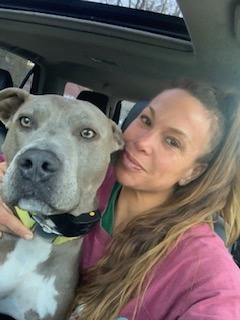
So now my goal is to help others realize how much things change for you and your pets when you see everything they do from their perspective. Not your projected perception. Their actual perception. Everything they do stems from love, acceptance, and a desire to try to make their guardian proud and keep heir guardian safe. They will never understand our perspective, they aren’t wired that way.
When you see behaviors through their perspective your pets will not be confused or scared, ever! And the relationship between the two of you will reflect that!
Don’t Discourage Communication

Guardians shut down their animals efforts to communicate frequently. They unintentionally discourage their animals from communicating and then wonder why their animals do “bad” things. 

Animals will use a growl, a hiss, ears back, showing teeth, etc.. as a warning that theyre uncomfortable and their limits are being pushed. As humans we can use words to communicate to others when we feel those things. Animals can’t. Those growls, hisses, ears pinned, teeth showing, those are their forms of communication. 

It is the ONLY way they can tell us they aren’t comfortable, they are scared, they feel threatened, or they are reaching their limit, running out of patience.  They are not threatening you they are ASKING you to stop doing whatever it is that is bothering them. 

When you discipline them for these behaviors that are normal communication for them, you shut them down. They won’t keep trying to communicate with you. They will try to hold it together for as long as they can, silently, and then snap when they just can’t take it anymore.

That is unfair to them. 

Animals have limits like we do and they should be respected. When they are uncomfortable, we should respect that too and allow them space. 

They can only tolerate so much. They are animals with thoughts and emotions and personalities like us. 

When you shut down their efforts to communicate, not only do you make their lives more stressful, you are also making them lose trust in you. It’s not about discipline, it is about respect for them as living beings that are doing their best to find their way in a human focused world. 

It Takes SO Long

We all hear the 3-3-3 rule. It takes a rescue animal 3 days to decompress, 3 weeks to settle in, and 3 months to feel at home. If more people allowed animals this time, there would be far less failed adoptions.

BUT, Im here to say I don’t think it’s enough.

Please take the time to read this entirely. I volunteer a ton in rescue. I also talk to thousands of animals every year. I have adopted my own personal animals. I see and hear how hard it is for them to settle in. I see and hear how quickly they are expected to understand and know expectations. I see and hear how quickly they are expected to be “easy”.

I have seen and heard it so much, I have known for a long time, 3 -3-3 is NOT enough. Not even close. I have adopted my own animals, and I know 3-3-3 isn’t enough. Most importantly, despite the above, I just saw how long it takes.

When we adopt animals we often don’t know they prior, so yes in 3 months it seems they are settled in, feel at home, and now showing us their truest and best selves. Nope. They aren’t. We just don’t have anything to compare it to. We most often never knew them before trauma or before their previous guardian. We never knew them before their life got hard, or before their life fell apart.

For the first time, I did. My dad died in April of 2024. I took his dog into our family. It was a time consuming, extremely difficult transition because of my dog, TItan. That’s an entirely different story. Anyway, of course Buck (my dad’s dog) needed 3-3-3. His whole world had been turned upside down. Thankfully, he knew us though. We (my kids and I), have a neighboring house to my Dad’s property.

In a few months, yes, he seemed happy. He seemed more at home. The dog dynamics in the house were starting to settle. Buck was happy! He knew our routines. He caused no trouble at all. He truly tried to stay out of the way and not be noticed. Why? He was stressed and didn’t know anything about our home and our routine and our expectations, even though he knew us. And he was grieving his old life. Animals will grieve their old life, whether it was good or bad. It is what they know. And they love unconditionally even if their previous guardian was not kind.

Over the course of the last year Buck has been exactly the same. Happy, tail wagging, no trouble, quiet. However, for the last 2-3 weeks, 15 months after my dad died, my kids and I have randomly said ” Wow, Buck looks really happy today!”, or ” He is really acting like this is his home. “

Over the last 2-3 weeks we have seen a HUGE change in him. Huge! He is a totally different dog. We knew him before, but we didn’t live with him. So of course when we’d go over to visit he was very happy just like any dog would be with visitors. But we didn’t see him all day every day in his day to day routine with my dad.

So when he came to live with us, yes he was happy. He showed it. But only during the last 2-3 weeks have we seen him shine differently. Sparkle differently in the eyes. Be extra happy! Just really act like he fits in here, like he knows this is home now.

It took him 15 months. It doesn’t mean every dog will take this long, but I can tell you they need a year. A solid year. Some will be less than 15 months and some longer. Buck is a dog that came to us without any baggage from past trauma. He lost his guardian, that is trauma, but it is not like an animal that has been bounced around between many homes, shelters, or the streets. He wasn’t a dog that took a long cross country journey to get to us. He wasn’t a dog that had been neglected, abused, or tied out on a chain his entire life. Add these traumas and it will take longer.

He was raised in a loving, kind, patient home from the time he was 8 weeks old. We started with the most stable, balanced, easy going temperament. We started with a dog that had correct and consistent training from day 1. We started with a dog that knew us, so he at least didn’t feel like we were total strangers. And it STILL took 15 months.

Now think about your rescue pet.

Were you a stranger? Someone completely unknown?

Do you know their history? Was there abuse, trauma, neglect?

Has your pet been bounced around between homes, shelters, the streets?

Has your pet taken a long transport journey to get to you?

Has your pet been sitting in a shelter for months? Years?

Has your pet lost hope?

Has your pet ever had any training? Proper training? Consistent training?

If you answered yes to any of those, expect it to take longer. We rarely adopt a dog like Buck that has been raised in a loving, kind and patient home. Unfortunately, most discarded animals were discarded because they didn’t end up with the best guardians, or they never had a guardian at all. Yes, there are exceptions. But the majority have had confusing, inconsistent, and unkind or unloving homes prior to abandonment.

So please, give your adopted animals a year.

This even applies to horses who are sold, not because they are discarded, but because it is the nature of the business.

Give adopted animals a year.

In my opinion, this is not made public enough because if humans knew it takes a year, or more, for an animal to be its best self, to fit seamlessly into your home, and to feel at home, many people would shy away. Too much time and too much effort in a world where we want easy and quick and perfect.

I promise when you wait that year or year and a half and see the change in your animal, you will be so happy. They deserve it. Animals don’t have it easy in this world. In fact, it’s really hard for them to be in a human centered world. We need more humans to start understanding them better, giving them more time and patience, and showing more kindness and empathy. We need humans to take the discarded and love them. Wait as long as it takes for them to settle, open up, and feel at home. Love & patience are foreign to many of them. And that is heart breaking. And we need humans to step up and slow down and stop trying to rush the process.

Do You Have A Plan?

Do you have a fire/emergency evacuation plan for your pets?

This is something very simple that is often overlooked.

We think about plans for our kids, for us, but what about our animals?

Animals WILL run back into their home or barn if given the chance. They feel safe in there, even though it may be on fire. This is why it is so important to have a plan. There is no time to waste in an emergency.

* Do you know where your pet sleeps? Is your pet with you?

* Do you have a leash or carrier easily accessible? Or a halter and lead for your farm animals? Pillow cases work great for cats because they dislike carriers… and getting a cat in a carrier when theyre scared is almost impossible.

* Who will be responsible for getting the animals out?

* What if you are on the second floor? What is the plan with them? We can jump out windows. Is there a place you can drop them safely down? Who will go first to grab the leash/ carrier so they don’t run away?

* Small animals, don’t forget them. Who will grab their enclosure? If not one is assigned, it is easy to overlook them in emergencies.

* Where can you go that will allow your animals to go with you?

There is a lot to think about and it Is very important you think about it.

Our animals are helpless. We need to be responsible for their safety, every day and in emergencies.

Lastly, are your windows tagged for firefighters to know there are animals inside if you are not home? These tags should stay update withe the number/types of animals. Inside.

Be prepared. Make a plan. Remind others to make a plan.

Look at Me!

One of the best ways you can strengthen your relationship with your pet is to get them to look at you.

Before you give them a treat or feed them, wait until they look at you.

Before you put their leash on for a walk, wait until they look at you.

Before you play with them, wait until they look at you.

It makes a big difference. They will bond with your deeper. They will look at you more and more all the time. Cueing into you. You will start to see and understand more of them through their eyes.

Just wait. Eventually they will look at you, theyll be tired of waiting and theyll look. Reward them immediately. Find every single opportunity you can to wait for them to look at you.

Just like humans, it will bond you deeper together.

Now, some animals are very fearful or submissive and eye contact can be scary and intimidating for them. For these pets, wait until they look at you (but not in the eye). Don’t make eye contact with them. Just look down and wait until they look up at you. Youll see it in your Peripheral vision.

Over time, these pets will likely start to feel comfortable enough to make eye contact with you.

Our Pet’s Hearing

Simple reminder today!

Our animals have 3-7x better hearing than humans.

This is why so many pets are afraid of thunder, fireworks, gun shots, etc.

This is also why we, as guardians, need to be mindful of our voice. If you yell at your pet , or someone else in the house, it is REALLY REALLY loud and scary to them.

If you play your music loud in the car it bothers their ears. We all love a great song, windows down, sun shining, but if you have an animal in the car with you, please don’t turn the volume up. The same goes for the music in the house, the Tv, Etc.

Living in loud environments can cause unnecessary anxiety and stress for pets. Pets that are (what we think) hyper sensitive and hyper reactive to loud noises and sounds, really are not that way at all. They just have much more sensitive ears than we do. Something we all know, but forget to take into consideration on a daily basis.

Their ears are so sensitive.

Living with animals responsibly and lovingly means adjusting our lives, our houses for their comfort since they are the ones that are the dependents. It is our job to make our world easier and happier for them.

Potty Training 101

Just a quick tip because most dogs will need to learn about potty training or need a refresher.

If your pet is unsupervised they have the ability to use any part of the house as their bathroom. Why would you assume they know they shouldn’t? They don’t. Unless someone teaches them consistently they don’t know. They don’t know right from wrong, they know what they’ve been taught (or not taught). And even IF they know to use the bathroom outside, if they are new in your house they don’t know where the door is.

Spanking or yelling at your pet for using the house as a bathroom will not work. Even if you catch them in the act. Animals learn best when undesirable behavior is never an option. It’s avoided. It’s prevented.

Potty training can be time consuming and frustrating because it can take a REALLY long time. But there is a way to speed it up?

Keep your dog tethered to you at ALL times. Puppies, adults, seniors, any dog that is moving into your home. Sound inconvenient? It is. But guess what it works SO well!

You will see when your dog is starting to show signs of needing to go to the bathroom. You will see sniffing, restlessness, etc. And you can bring your dog outside when you see these signs.

If your dog does seem to pee without you noticing ahead of time, I guarantee youll catch your dog in the act mid stream and you can pick the dog up or walk the dog outside. No harsh or loud words needed. Because you catch your dog in the act it is an effective correction.

If your dog is unsupervised around your house, you are less likely to notice the signs or if the dog uses the bathroom. And then it’s too late.

No matter what, consistency is the key. Your dog needs to be tethered to you all day every day for this to work quickly. But know what the added bonus is? The best part?

The relationship you will develop with your dog during this time will be so deep and so connected. You will literally be spending all your time together. Your dog will learn to trust you and to follow you (this helps recall!).

It is also very easy to ask for random “sits” or “downs” at various times during the day. Working your dog like this helps with enrichment, education, bonding, and stress relief. There are so many benefits.

If you have a new dog coming to live with you or just recently brought a dog into you family give it a try! But really give it a fair chance. Its not just a few days, its more like a few weeks. All day, every day, consistently. And crate when you aren’t home. Or can’t tether.

Lost Pets

Today is #NationalLostDogAwarenessDay

But let’s remember cats also get lost very often too .

I have done many lost pet sessions. Here are some things I want to share with all of you. Important things to remember to keep your animals SAFE. A lost pet is heart breaking for the guardians and scary for the animal. Though some lost animals are just freak accidents, most are preventable. Even if you don’t think you’ll ever lose your pet I encourage you to read all of the information below. Maybe it will come in useful. Maybe you can share it with someone. Hopefully it’s never needed. But if it saves even one pet from getting lost, it’s worth it.

  • It’s the animals that people think will never “run away” that get lost most often. Most likely the guardians aren’t as aware or attentive because of a false sense of security.
  • Newly adopted pets go missing ALL the time. Within days of adoption. Keep an eye on them, because they will be adjusting and maybe fearful they may try to run out the door, slip a collar, or just have another “new pet” incident occur. These animals DO NOT know where home is.
  • Holidays! With people in and out and more going on, animals can get scared and flee. Or they may unknowingly slip out of the door or fenced area due to guests leaving things open, not paying attention, or just the animal not being properly supervised because of the busy environment.
  • Fireworks. Even pets you think aren’t afraid have the potential to get spooked one time. When there are fireworks secure your pet at all times. This is the biggest cause of missing pets.
  • Car accidents. So many dogs are lost from accident scenes. They are not near home, don’t know how to get back home, and sometimes they are even injured. Buckle your pets in like you would do with your kids. It keeps them safe. The last thing you want to worry about during a car accident is where your dog is. The flee the scene quick and far because they are so afraid.
  • Put a GPS on your pet. Please! Identification tags and microchips are great if they end up found but most animals are too scared to ever approach a human when they are lost. A GPS will help you find your animal right away! This is the single best thing you can do to make sure your pet is found. And make sure the GPS collar stays charged to at least 35% so you have a buffer of time if the animal is lost.
  • Sadly, the vast majority of lost pets will never return home. They either are too afraid to show themselves to humans, they will die, they will get hurt and be unable to get to help, or they will be picked up and never identified. When fear takes over they are irrational. They will not come to people or you, they get too scared.

IF YOUR PET IS LOST

Put scented items outside of your home. Things that smell like YOU. Your pet loves YOU. This will help. Dirty clothes is best. And change it every couple days, to freshly dirty clothes to make sure the smell is strong.

If you go out searching make sure no one is calling frantically or yelling. That is scary for a pet. As soon as your animal is lots all sense of reason is gone. Their natural instincts kick in and they try to stay safe. Survival kicks in. They will be afraid, thinking you are MAD if you are yelling frantically. Call their name like you are playing with them.If it sounds fun, it sounds safe, and that is the best chance you have of brining them out of hiding/running.

  • Get a drone ASAP. Time is of the essence. The longer your pet is gone, the less chance you are going to have a happy reunion. As soon as your pet is gone, react. Don’t wait.
  • If you have a dog, and your dog has really good dog friends, bring those dogs to search. Animals will be more likely to show themselves to other animals.
  • Animals know how to hide to the point that many times a human will walk by (even their guardian) and NOT see them. They get so scared it’s all they know how to do. If your pet is lost look in and under EVERYTHING, even if you think the area is too small, too dense, or too unappealing. Your pet will hide in spots that you will walk right by and never notice. Search every single inch of every single area. It’s next level hide and seek. Trust me. I have seen many animals be found deceased in areas that were searched before the animal died.

The best thing you can do is PREVENT a lost pet. A lost pet is something no one (pet or guardian) wants to go through. PLEASE GPS your pets. It is the most likely way you will ever find them immediately if they ever go missing. There are many GPS options available. Even if they are not exact, they will give you a small area to check. Please share this information far and wide. Let’s keep pets HOME and SAFE with preventative measures.

Challenges, Not Problems

Sometimes I learn from the animals and sometimes I learn from their guardians. 

One of my regular clients emailed me and used the word “ challenges “ instead of problems. It reminded me how important it is to make sure all of you understand the difference. 

None of the animals have problems. They are perfect beings in every day.  Many though, have challenges, just like humans. These challenges can be from past experience or just part of who they are. 

When someone has a challenge to overcome, support and empathy is needed. Not discipline. Not frustration. Not anger. Not a lack of understanding. When animals are trying to overcome challenges this can display as behavioral issues or insecurities. 

In those moments, you can explain something to them 1000x but they won’t understand. You can correct them over and over but they won’t understand. They will just suffer more and be more confused and feel more alone. 

What they need is for you to understand the challenge they are facing and trying to overcome. They need empathy. They need support. This support looks like you setting up their environment for them to succeed. That is the most important and effective thing you can do. 

SET UP THEIR ENVIRONMENT FOR THEIR SUCCESS. 

If you could view “problems” as “challenges”, how would that change your reaction to the situation?   And how would that change the way you engage with your pets in those moments?  Something to think about. 

They are so similar to us in so many ways. And if more humans understood that and offered them the same kind of patience, time, and understanding, relationships between humans and animals would be so much easier. 

Personalities Can’t Be Changed or Trained

Please don’t try to make your pet into someone it’s not.

Some pets are INTROVERTS. They like to spend more time alone. These are great for people that work a lot, have busy social lives out of the home, or aren’t looking for a pet they can cuddle with all the time. When you have an introvert, you can’t take it personally if they want to be alone.

These introverts are also good for people that can accept their pet’s personality and allow their pet the alone time that is desired.

There are others that are ACTIVE ADVENTURES! These are great for active people. Runners, hikers, people always on the go and willing to take their pet with them &/or provide plenty of exercise and engagement at home. If these pets do not get what they need (exercise and engagement) they usually become destructive and develop nuisance behaviors because they are frustrated.

Then there are some that are EXTROVERTS. They want to be with people ALL THE TIME. These pets are great for people that are home a lot, people that have busy homes with lots of people in and out, people that like to bring their animals to many places.

And let’s not forget the BROKEN pets. These pets need extra kindness, extra patience, and extra time. These pets are good for people with an extra gentle heart. People that are healers. People that can ADAPT their life to help these animals feel safe and secure.

Try your best to pick a pet that fits your lifestyle. It makes things so much easier for you and the animal. But, when you get a pet that doesn’t fit your lifestyle… what do you do?

So what do you do if you get an animal that doesn’t fit your lifestyle?

Have realistic and reasonable expectations. You can’t change them so try to do your best to provide what they need and all of a sudden everything gets easier.

This means adapting your lifestyle in some way, just like you would for a child. There are ways you can do this without burdening your family or without changing your lifestyle drastically. It requires compromise on both sides. But we do it for human children, and we need to do it for animals too.

* You can hire pet care (short check ins, full days, walks, day cares, play time, etc.)

* You can create quiet, isolated spots in the home for your pet to access when in need of alone time.

* You can set boundaries. There is NOTHING wrong with telling people they can’t pat your animal, engage with your animal, or hold your animal. There is NOTHING wrong with telling people your pet needs space. Or saying your pet is learning, and you need someone to disengage. YOU are the voice for your pets. YOU must advocate for them so they can succeed.

  • Set up self driven enrichment. There are many options for in home pets to keep them busy and entertained. Bird feeders by the window, engagement toys that toss food, dog/cat TV is now an option, music, etc.

* Give your animal a job is was meant for and bred for and ENJOYS (horses especially!)

* Get your animal a friend if they are social. This does WONDERS for ALL types of personalities.

* Make small changes to your life. More time to play, walk, go for a ride, etc… It can be 10-15 min or 60 min and it WILL help!

* When you DO have time, stay off your phone or the TV and engage with your animal fully. This attention on them WILL make a huge difference for all types.

Remember, animals don’t get to coose where they live. We choose. And if we choose to have them live with us, we are agreeing to make sure we meet their needs (physical and emotional).

So if you are considering bringing a new animal into the home, ask the current human about the animals personality type, its needs, and do breed research. Consider age, breed, current living situation of the animal. Explain yours to its current caretaker. Talk and communicate. The goal is for everyone to be happy.

Remember if your animal is doing something “wrong” it is their way of communicating their needs are not being met. Punishing them won’t help. Meeting their needs and understanding them will.

RSS
Follow by Email
Set Youtube Channel ID
Instagram